




How Did a Loudonville Buyer Win a Five-Offer Bidding War Without Pushing Past Comparable Upstate NY Home Sale Prices?
The situations described here are composites drawn from the types of jobs and decisions we encounter regularly. Names and specific figures are illustrative.
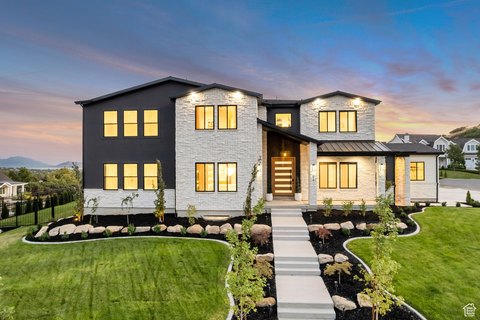
The first showing was at 11 a.m. on a Saturday in early June, the kind of cloudless Capital Region morning that makes every house look better than it is. A couple in their mid-thirties, relocating from Boston for a hospital job in Albany, walked into a 1,900 square foot colonial in Loudonville and knew within about fifteen minutes that they were going to make an offer. Their problem was that, by the end of that same weekend, four other buyers knew the same thing. By Monday afternoon, the listing agent had set a Tuesday offer deadline. The seller wanted “highest and best.” That phrase is doing a lot of work this spring across the Capital Region, and it almost always sends buyers into territory they later regret. What the couple ended up doing instead — and what the offer that won looked like — came down to a quiet, slightly boring conversation about Upstate NY home sale prices and what the actual data in their micro-market would support.
Mid-June 2026 is peak season in the Capital Region. Inventory between Loudonville, Latham, Niskayuna, and the better pockets of Clifton Park is still tighter than buyers expect after reading national headlines. Rates have softened just enough this spring to pull a layer of fence-sitters back into the market, but listings priced sharply and shown well are still drawing three to seven offers within their first weekend.
Where the bidding war actually starts
Most buyers think a bidding war starts when they decide how much to offer. It starts earlier than that, in the conversation about what comparable homes have actually sold for in the last ninety days within roughly a half-mile radius. For this Loudonville colonial, listed at $549,000, the recent closed sales told a fairly clean story. Three similar houses had closed between $562,000 and $578,000 since March. One outlier with a finished basement and a remodeled kitchen had hit $612,000. The list price was already a touch below the bottom of the supportable range, which is how the listing agent had engineered the multiple-offer scenario in the first place.
The first decision was to draw a hard line at $580,000. That number was not pulled from the air. It was the top of the supportable comp range, plus a small premium for the fact that this particular house showed well and had a newer roof. Anything above $580,000 would have to be justified by something other than recent sales, and in this case there was nothing to justify it.
The appraisal gap conversation no one wants to have
An appraisal gap clause is a promise to make up some or all of the difference, in cash, if the appraisal comes in below the contract price. Every listing agent in the Capital Region is asking for one right now. Buyers hate them because they feel like a tax on winning. The mistake is thinking of the gap as a strategic add-on. It is really a cash exposure number that has to fit inside what the buyer can actually lose without changing the shape of their life.
For this couple, the math was straightforward. They had $135,000 in liquid savings, were putting twenty percent down on a $580,000 purchase ($116,000), and needed about $14,000 for closing costs and moving. That left a thin cushion of around $5,000. We landed on a $10,000 appraisal gap — capped. Capped gaps are stronger than they look on paper. A seller who sees a $10,000 capped gap reads it as commitment without recklessness. A $50,000 uncapped gap looks like a buyer who has not thought through what happens if the appraiser disagrees with the room.
That same appraisal-risk math sits at the center of how we map seller expectations when we are on the other side of these deals. The structure of a Capital Region listing strategy turns on the same comp set, just used to set list price instead of offer ceiling.
What got removed from the inspection contingency, and what stayed
The standard New York inspection contingency lets a buyer walk away or renegotiate based on anything the inspector finds. Sellers in this market often push for it to be waived entirely. Waiving inspections in a Loudonville colonial built in 1962 is a bad idea no matter how competitive the market is — older Capital Region housing stock has a long list of plausible surprises, from buried oil tanks to galvanized supply lines to ungrounded knob-and-tube tucked behind a finished ceiling.
What we wrote instead was a narrowed inspection clause: the couple kept the right to inspect within seven days but agreed in advance to handle anything under $3,000 themselves. They retained the right to renegotiate or terminate only for findings above that threshold, or for any structural, environmental, or mechanical defect a reasonable buyer would consider material. This kind of clause tells the seller the buyer is not going to come back with a list of nine hundred dollars in caulking and call it leverage. It preserves the buyer’s actual protection — the radon test, the sewer scope, the electrical panel inspection. Skipping inspections in this region is the move that buys a thirty-thousand-dollar surprise within the first year more often than people realize.
The escalation clause — useful, but only inside a cap
The escalation clause is the piece most buyers either misuse or refuse to use. The idea is simple: the buyer offers, say, $565,000, and agrees to beat any competing bona fide offer by $2,000, up to a ceiling. The ceiling is what matters. Without a ceiling, an escalation clause is an open checkbook.
The offer that went in Tuesday at 5 p.m. opened at $565,000, escalated by $2,500 over any other verifiable offer, capped at $580,000. It included the $10,000 capped appraisal gap, the narrowed inspection language, and a flexible closing window of forty-five days with a rent-back option for the seller up to thirty days at no charge. The rent-back was the quiet weapon. The seller had a closing of their own pending in Saratoga that was running behind. A free month of post-closing occupancy mattered to them more than another $5,000 in price. That kind of inference is most of what an experienced agent actually does in a multiple-offer scenario, and it is something you learn by reading how Capital Region contracts and negotiations actually unfold across hundreds of deals.
What the other offers looked like, and why they lost
The highest gross number had been $592,000 with no appraisal gap and a fourteen-day inspection contingency with no dollar threshold. Another offer was $578,000 with a $25,000 appraisal gap but a mortgage contingency tied to a lender the seller had never heard of. A third was an all-cash bid at $555,000 that wanted to close in fourteen days. The winning offer, when it escalated, landed at $577,500 — below the highest number on paper, but inside the supportable range, with a capped gap the seller could trust, a tight inspection window with a real dollar floor, and a closing structure built around what the seller actually needed.
The honest answer to whether they had to write the biggest check to win is no. In a clean Capital Region multiple-offer scenario, the highest gross price loses to a tightly written offer maybe a third of the time — especially when the seller has a complication of their own that the right terms can solve. The appraisal eventually came in at $578,000 — almost exactly inside the contract price. The capped gap never had to be used.
What the data actually says about overpaying in mid-2026
Across the Capital Region, list-to-sale price ratios in June 2026 are running roughly 101 to 104 percent in the desirable school districts — Niskayuna, Loudonville, parts of Bethlehem and Clifton Park. That is a meaningful premium over the asking price, but it is not the runaway ratio the 2021 market produced. The houses that close at 108 percent or more of list are almost always the ones that were priced deliberately low to engineer a frenzy.
What changes block to block is real. A street in Loudonville with mature trees, sidewalks, and a feeder elementary school within walking distance can support $25 per square foot more than a street six blocks over with the same housing stock. None of this is visible from a national headline about Upstate NY home sale prices. It is visible only when someone sits with the actual closed sales.
What the couple took from it
A few weeks after closing, the wife said the thing that mattered most was being told a number and being held to it. The Monday-night urge to jump to $595,000 would have cost them roughly $15,000 in price plus a corresponding bump in the appraisal-gap exposure plus a slightly worse mortgage payment for thirty years. None of that would have changed whether they got the house. They got it because the structure of the offer fit the seller’s situation, not because the gross number was the highest.
For any buyer walking into the second half of June 2026, the honest expectation is that the best inventory is still drawing competition, and the gap between a thoughtful offer and a reckless one is wider than it looks. The work happens before the offer goes in — in the comp sheet, in the inspection language, in the cap on the gap, and in the small details about what the seller actually needs out of the closing.


The key lesson is that a competitive offer does not have to become an unlimited offer. A measured appraisal gap, a narrowly defined inspection clause, and an escalation cap based on comparable sales each address a different risk. The most important step is deciding those limits before bidding starts, when the buyer can still evaluate tradeoffs calmly. One detail also deserves clarification: the post date is October 2025, while the summary places the composite transaction in June 2026.
A bidding strategy is stronger when each concession has a defined limit. The appraisal gap should reflect available cash and defensible comparable sales, while an inspection clause can focus on material defects rather than eliminating due diligence altogether. Capping escalation also keeps offers tied to evidence instead of competitive pressure. Buyers should calculate the maximum purchase price, potential appraisal shortfall, repair exposure, and remaining reserves together before submitting terms; winning is only useful if the resulting obligation remains affordable.
The useful distinction here is between making the highest bid and making the strongest evidence-based offer. In the composite case, the appraisal gap, inspection language, and escalation cap each addressed a different seller concern while keeping the price tied to comparable sales. A sensible next step for buyers would be to define those three limits before negotiations begin: the maximum supported price, the cash available for an appraisal shortfall, and the inspection risks they will not waive. That preparation can reduce emotion-driven decisions during a competitive deadline.
The useful distinction here is between making an offer competitive and making it financially uncontrolled. A measured appraisal gap defines how much risk the buyer will accept if the valuation comes in low, while a carefully limited inspection clause can preserve protection against major defects. Tying an escalation cap to comparable sales adds another boundary against emotional bidding. These terms should be modeled together because the purchase price, possible cash shortfall, and repair exposure all affect the buyer’s real cost.
The strongest part of this strategy is that each concession has a defined boundary. An appraisal gap can improve certainty for the seller, but tying it to comparable sales and a firm cap keeps the buyer from replacing analysis with emotion. A carefully scoped inspection clause preserves a meaningful safety step without making the offer unnecessarily broad or vague. The composite timeline should be clarified, though: a post dated October 2025 cannot normally summarize a June 2026 transaction unless the date is prospective or one of those dates is incorrect.
A bidding-war strategy is safer when the offer’s strongest terms are defined before emotions take over. The measured appraisal gap, limited inspection language, and data-based escalation cap described here work together because each addresses a different seller concern without making the buyer’s exposure unlimited. One useful step is to calculate the maximum cash needed if the appraisal comes in low, then assess that amount separately from the down payment and closing costs. Clear limits can keep a competitive offer aligned with comparable sales and the buyer’s actual financial capacity.
A bidding-war strategy is strongest when every concession has a defined financial boundary. A measured appraisal gap can make an offer more credible without committing the buyer to cover an unlimited valuation shortfall. Likewise, a narrowly drafted inspection clause can preserve protection for serious defects while reducing uncertainty for the seller. The escalation cap matters for the same reason: tying it to comparable sales creates a stopping point before competitive pressure replaces judgment. Buyers should calculate their maximum exposure under all three terms together, since the purchase price, appraisal shortfall, and potential repair costs can compound quickly.
The key distinction here is between making an offer more competitive and simply making it more expensive. A measured appraisal gap can address valuation uncertainty, while a narrowly defined inspection clause preserves protection against serious defects. An escalation cap grounded in comparable sales also limits the influence of bidding pressure. One sensible step is to calculate the maximum cash exposure if the appraisal comes in low, then evaluate that amount separately from the purchase price. These terms should be reviewed together because each shifts a different category of financial or property risk.
The strongest point is that a competitive offer can be structured around evidence rather than a higher headline price. A measured appraisal gap limits exposure if the valuation comes in low, while a carefully defined inspection clause can reassure the seller without abandoning every protection. Tying an escalation ceiling to comparable sales is another useful step because it establishes the walk-away number before bidding pressure takes over. Buyers should still confirm how each clause affects financing, deposits, and cancellation rights in their specific contract.
Short timed blocks can make ordinary tasks easier to start because the finish line is visible. A useful timer does not need a crowded workspace: setting hours, minutes, and seconds, then being able to pause, resume, or reset, covers most study, cooking, and break routines. An end sound also prevents people from repeatedly checking the screen. A clean online timer is especially practical when a browser is already open.